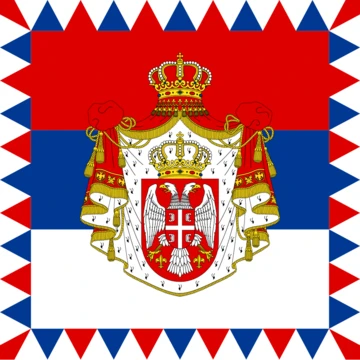
Casimir I the Restorer
Duke of Poland who restored unity after a period of chaos.
Casimir I the Restorer (Kazimierz I Odnowiciel, 25 July 1016 – 19 March 1058) was a Piast duke who ruled Poland from 1040 until his death. He earned his nickname by piecing together parts of the Kingdom of Poland after a chaotic period, bringing Masovia, Silesia, and Pomerania back under his control. He never managed to crown himself king, held back by internal unrest and outside threats.
Not much is known about his early years. He likely grew up at the royal court in Gniezno and was sent to a Polish monastery in 1026 for an education. Older accounts suggest he once aimed for a church career—possibly as an oblate—and sought permission to become a monk, but modern historians doubt this. In any case, he left church work in 1031.
His father, Mieszko II Lambert, had been crowned king in 1025 after Bolesław the Brave’s death. But powerful nobles, wary of a strong central ruler, clashed with him. Mieszko’s half-brothers Bezprym and Otto allied with Emperor Conrad II, whose forces attacked and retook Lusatia. Years of turmoil followed: Mieszko lost the throne to Bezprym in 1031, fled to Bohemia, was imprisoned and castrated by Duke Oldřich, later regained part of the kingdom, and died under suspicious circumstances in May 1034.
During Bezprym’s reign, Casimir and his sisters were taken by their mother Richeza to Germany. At Bezprym’s request—or perhaps for safekeeping—Richeza reportedly handed the Polish crown and regalia to Emperor Conrad II. When Mieszko died in 1034, Casimir, about 18, was in Germany at the court of his uncle, Archbishop Hermann II of Cologne.
Greater Poland erupted in revolt against nobles and clergy, with a pagan revival lasting years. Masovia broke away under a local lord named Miecław, and Pomerania did the same. In 1037, Casimir and his mother returned to Poland to claim the throne, but a baronial rebellion and commoner unrest forced them to flee to Saxony. Casimir tried again in 1038 with Richeza’s help, failed, and fled to Hungary, where King Stephen I imprisoned him. Richeza stayed in Germany as a nun until her death in 1063.
Taking advantage of the chaos, Duke Bretislaus I of Bohemia invaded in 1039, ravaging Lesser and Greater Poland, capturing Poznań, sacking Gniezno, and taking relics of Saint Adalbert, Radim Gaudentius, and the five hermit brothers. On his way back, he seized part of Silesia, including Wrocław, and destroyed ch
- born
- 25 July 1016
- died
- 19 March 1058
- field
- Monarchy
- nationality
- Polish
- known_for
- Reuniting parts of the Kingdom of Poland after turmoil; reintegrating Masovia, Silesia and Pomerania
Lore & Background
Casimir was the son of Mieszko II Lambert and Richeza of Lotharingia. Relatively little is known of his early life; he spent his childhood at the royal court in Gniezno and was sent to a Polish monastery in 1026. Some older sources suggest he initially wanted a career in the Church, possibly as an oblate, but modern historians do not support this. He left church work indefinitely in 1031. During the reign of his uncle Bezprym, Casimir and his sisters were taken by their mother to Germany for refuge. At his father's death in 1034, Casimir was about 18 and at the court of his uncle, Archbishop Hermann II of Cologne.
After a pagan revolt and secession of Masovia and Pomerania, Casimir and his mother returned to Poland in 1037 but were forced to flee to Saxony. A second attempt in 1038 also failed, and he fled to Hungary, where he was imprisoned. Duke Bretislaus I of Bohemia invaded Poland in 1039, ravaging the country. Casimir then went to Germany, where Emperor Henry III gave him military and financial support. With an alliance with Yaroslav I the Wise of Kiev, Casimir returned and retook most of his domain. In 1041, Bretislaus renounced claims to Polish lands except Silesia. Casimir later seized Silesia in 1050, and in 1054 the Emperor ruled it remain in Poland for an annual tribute.
Reader's Guide
Casimir I the Restorer's significance lies in his successful reunification of Polish territories after a period of internal revolt and foreign invasion. By reintegrating Masovia, Silesia and Pomerania, he restored the territorial integrity of the Piast realm. His reign marked a shift in power from the drużyna to the landed gentry, and he introduced heraldry and feudal fiefdoms to Poland, transforming warriors into medieval knights. He also re-created bishoprics in Kraków and Wrocław and erected the new Wawel Cathedral. Although he could not crown himself king due to pressure from the Holy Roman Emperor, his consolidation of ducal authority and internal reforms laid the groundwork for the later revival of the Polish kingdom under his son Bolesław II the Bold. His epithet 'the Restorer' reflects his central role in ending the chaos and rebuilding the state.
Did You Know?
- Casimir's father Mieszko II Lambert was crowned King of Poland in 1025 but was forced to cede the throne to Bezprym in 1031.
- Casimir married Maria Dobroniega, daughter of Grand Duke Vladimir I of Kiev; the exact year of marriage is disputed among historians.
- In 1039, Duke Bretislaus I of Bohemia sacked Gniezno and took the relics of Saint Adalbert.
- Casimir moved the capital of Poland to Kraków, the only major Polish city untouched by the wars.
More in European Medieval Monarchs 1-24
Elsewhere in the European Medieval Monarchs universe
Spotted an error? Know more?
This is a living reference — every entry is fact-audited, and reader corrections feed straight into our audit queue. Suggest an edit · See this site's audit record